_edited_edited.png)
ADHD in Older Adults: Signs, Diagnosis, and Treatment
Updated: May 4
Does ADHD Change With Age?
Yes — but it does not necessarily worsen. Studies suggest that ADHD symptoms tend to remain relatively stable over a lifespan. However, the presentation shifts:
Inattention becomes more prominent
Hyperactivity often decreases
Impulsivity can look different
In older adults, ADHD is more about:
Chronic forgetfulness
Difficulty following instructions
Disorganization
Poor time management
Trouble completing sedentary tasks
Restlessness that feels internal rather than overt
Approximately:
71% report significant inattention
58% report impulsivity
54% report hyperactivity or restlessness
54% report disorganization
While some symptoms (particularly hyperactivity) may decrease with age, the social and emotional impact of ADHD often becomes more pronounced, especially as life structure changes in retirement or later adulthood.
Why Is ADHD in Older Adults So Often Missed?
There are several reasons.

1. High-Functioning Compensation
Some individuals with ADHD and high intelligence develop strong compensatory strategies over decades. They may rely on structure, rigid routines, external reminders, or sheer cognitive ability to mask executive functioning challenges. From the outside, they appear successful. Internally, they feel chronically overwhelmed. These compensatory strategies can obscure ADHD for years.
2. Memory Limitations Complicate Diagnosis
Diagnosing ADHD requires evidence of childhood symptoms. But in older adults:
School records are often unavailable.
Parents may no longer be alive.
Memory becomes less reliable.
ADHD itself impairs self-awareness and recall.
Normal age-related memory changes can further complicate retrospective reporting, making older adults seem like “unreliable historians” of their own developmental history — even when ADHD was clearly present.
3. Generational Context
In previous generations, behaviors consistent with ADHD were often:
Tolerated
Misattributed to personality
Dismissed as “lazy” or “undisciplined”
Simply overlooked
As a result, many older adults were never evaluated.
ADHD vs. Mild Cognitive Impairment or Dementia
One of the most important clinical challenges is distinguishing ADHD from neurodegenerative conditions.

ADHD in older adults can look like:
Forgetfulness
Inattention
Executive dysfunction
Difficulty with daily organization
Trouble managing finances
These features overlap with Mild Cognitive Impairment (MCI) and early dementia. However, there are important differences:
ADHD-related cognitive issues are long-standing, not progressively worsening.
Executive function decline in ADHD does not typically follow the degenerative pattern seen in dementia.
Many cognitive complaints in ADHD are influenced by comorbid depression or anxiety.
Research suggests that older adults with ADHD may show weaknesses in:
Working memory
Attention
Episodic memory (encoding and delayed recall)
However, the typical progressive executive deterioration seen in Alzheimer’s disease is not consistently found in ADHD. In fact, depression often has a stronger and more direct impact on cognitive performance than ADHD itself. Treating mood symptoms can significantly improve perceived cognitive decline. Accurate differential diagnosis is essential.
Comorbidities: The Bigger Picture
ADHD rarely exists in isolation — and this is especially true in later life. Common comorbidities include:
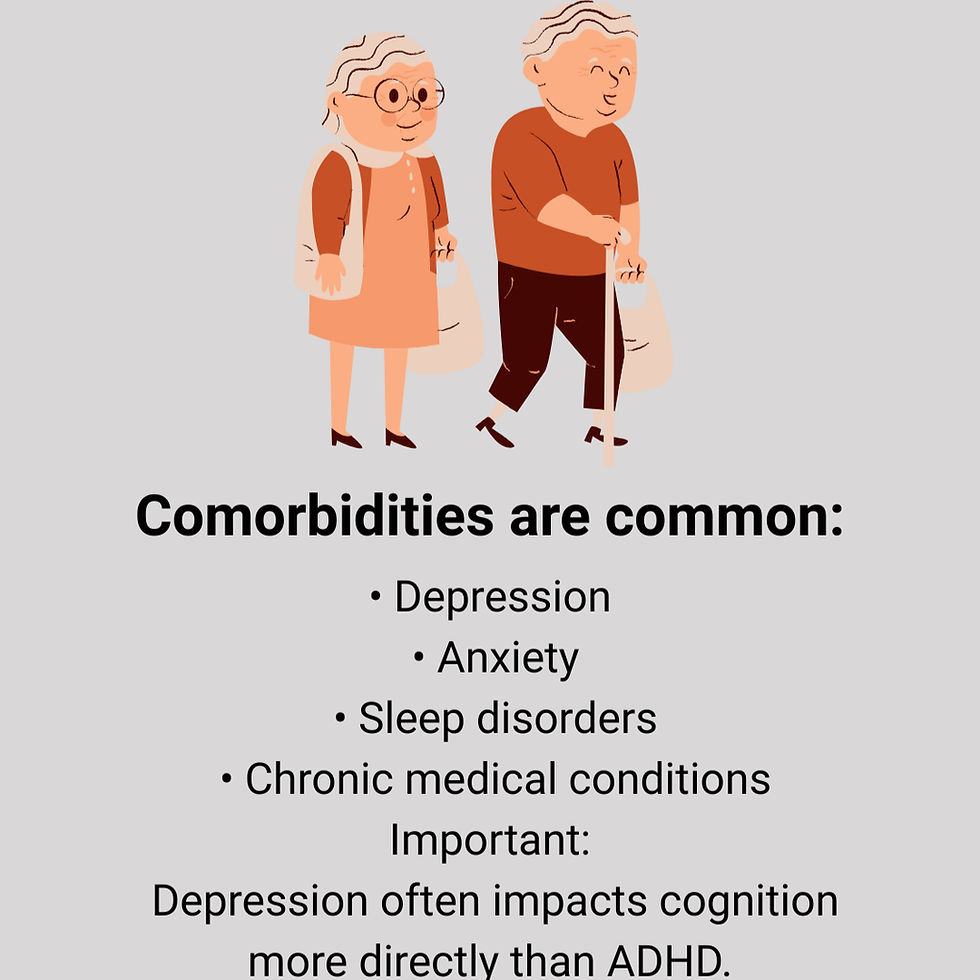
Depression
Anxiety
Sleep disorders
Substance use disorders
Eating disorders
Chronic pain
Cardiovascular and pulmonary conditions
Older adults with ADHD frequently report:
Lower self-esteem
Social isolation
Chronic interpersonal difficulties
Impaired money management
Disorganization affecting daily life
Poorer perceived health
Research also suggests higher rates of chronic physical illness and poorer quality of life among older adults with ADHD. Importantly, while hyperactivity may decrease with age, social impairment may increase. The cumulative impact of decades of misunderstood symptoms can lead to fractured relationships, professional instability, and persistent shame.
Does ADHD Get Worse Over Time?
Current evidence suggests that ADHD symptoms themselves do not necessarily worsen with age. However, the cumulative consequences of untreated ADHD can compound over decades. Financial stress, relationship strain, occupational instability, and chronic self-doubt can make ADHD feel heavier later in life — even if core symptoms remain stable.

Treatment in Older Adults
There is good news. Older adults appear to benefit from ADHD treatment similarly to younger adults. Both pharmacologic and psychological treatments can be effective. However, treatment requires careful consideration.
Medication Considerations
Cardiovascular history must be reviewed.
Polypharmacy increases the risk of drug interactions.
Dosing may require more gradual titration.
Providers may lack experience prescribing ADHD medication in older adults.
Despite concerns, many older adults tolerate and benefit from stimulant or non-stimulant medications when properly monitored.
Psychotherapy and Skills-Based Interventions
Non-pharmacologic interventions are often essential:
Cognitive Behavioral Therapy (CBT) for ADHD
Executive function coaching
Organizational systems
Sleep optimization
Treatment of comorbid depression and anxiety
Addressing mood disorders frequently improves cognitive functioning significantly.

When to Consider an Evaluation
An ADHD assessment may be worth considering if an older adult experiences:
Lifelong patterns of disorganization
Chronic forgetfulness predating aging
Repeated difficulty managing tasks despite high intelligence
Persistent restlessness
Ongoing interpersonal or financial difficulties linked to impulsivity
Cognitive complaints not fully explained by medical conditions
It is also important to evaluate depression, anxiety, sleep, medical conditions, and medication side effects concurrently.

The Bottom Line
ADHD does not end at age 18 — or 40 — or 60. It persists across the lifespan in a meaningful minority of individuals. In older adults, it often presents primarily as inattention and disorganization rather than hyperactivity. It is frequently masked, misdiagnosed, or mistaken for cognitive decline.
With accurate diagnosis and thoughtful treatment, quality of life can improve significantly — even later in life. If you or someone you love wonders whether lifelong struggles with attention, organization, or impulsivity might reflect ADHD, a comprehensive evaluation can provide clarity. Understanding is often the first step toward relief.
Live with intention,
Dr. Sayanti Bhattacharya MD, MS
Verve Psychiatry


Comments